


Extended Edition: Hannibal Sacks Rome

In the original scenario, we examined the possibility that Hannibal Barca could advance on Rome after the Battle of Cannae and potentially sack the city. A more precise question emerges when examined through the lens of operational realities: what would Hannibal have required to take Rome, and how feasible would a siege have been given the forces, logistics, and defenses in place at the time?
Manpower
Hannibal emerged from Cannae with one of the most effective field armies in the ancient world, particularly formidable in cavalry and maneuver warfare, but not suited for siege operations.
Estimates suggest he retained roughly 47,000–50,000 troops after the battle. His infantry, composed of Libyan heavy infantry, Iberian soldiers, and Gallic allies, remained largely intact, numbering around 38,000–40,000. The Libyan and Iberian units were relatively unscathed, while the Gallic contingents suffered heavier losses due to their frontline positions. Hannibal also retained a strong cavalry arm of approximately 8,000–9,000, including Numidian light cavalry, Celtic cavalry, and a smaller Iberian contingent.

This diverse yet disciplined force allowed him to continue threatening Roman supply lines and execute highly effective open-field tactics, though the army’s composition and lack of siege equipment made prolonged sieges impractical. These forces were experienced and cohesive, but they lacked the specialized capabilities required to reduce a fortified city. There was no siege train, no large-scale engineering corps, and no reserve of heavy infantry sufficient for sustained assault operations. His army remained optimized for maneuver and battlefield engagements rather than static encirclement.
Rome, despite suffering catastrophic losses at Cannae, estimated between 50,000 and 70,000 dead, retained access to a vast reserve of manpower. While some sources cite figures of roughly 700,000 infantry and 70,000 cavalry, these numbers reflect the total pool of eligible Roman and allied citizens rather than active field forces. In practical terms, the Republic demonstrated remarkable resilience: new legions were quickly raised, additional levies were drawn from broader segments of the population, and political structures ensured that Rome avoided collapse. Even after one of the worst defeats in its history, Rome was able to field multiple armies simultaneously across several theaters, replenishing losses far more effectively than Hannibal, whose highly skilled but smaller army could not easily replace casualties or extend its strategic reach beyond southern and central Italy.
Fortifications
Rome’s defensive strength extended far beyond its manpower. The city was protected by the Servian Wall, a stone fortification encircling roughly 11 kilometers, standing 4.5–6 meters high and 3–4 meters thick, making it highly resistant to direct assault without specialized siege equipment. The surrounding terrain—including Rome’s seven hills, elevated approaches, and narrow valleys—further enhanced the city’s defensibility, while internal gates, towers, and fortified positions provided additional depth in the event of a partial breach.

Beyond the city itself, Rome’s defensive network included roughly 30–40 major Latin colonies and allied settlements, along with dozens of smaller communities across central Italy. These outposts strengthened Rome’s strategic posture by serving as resupply points, intelligence sources, and obstacles to enemy foraging. At sea, Rome maintained control of critical supply routes with fleets of 200–300 warships, ensuring that grain and other resources could continue to reach the city. Together, these fortifications and networks made it impossible for Hannibal’s army to fully isolate Rome, demonstrating the Republic’s formidable structural and geographic defenses.
The March and the Siege
As Hannibal moved north from Cannae, the logistical demands on his army increased dramatically. His force of roughly 47,000–50,000 men required around 75 metric tons of food per day, plus an additional ~100 metric tons of fodder for approximately 10,000 horses and pack animals. Hannibal relied heavily on foraging to meet these needs, but central Italy posed significant challenges.
Populated areas were better defended, local communities were less willing to provide supplies, and Roman-aligned forces actively disrupted foraging efforts. Seasonal changes compounded the difficulty: as campaigning moved into autumn and winter, declining agricultural output and worsening weather—cold, rain, and muddy roads—would have slowed movement and increased attrition, potentially causing 10–20% losses from exposure, disease, and exhaustion.
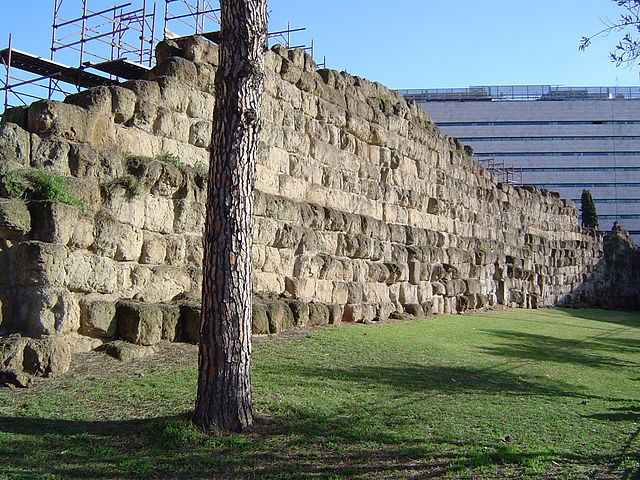
Even if Hannibal had reached Rome, his strategic options were limited. The city’s Servian Wall could not be breached without heavy siege equipment, which Hannibal lacked. A blockade was theoretically possible but impractical: maintaining continuous coverage of the walls and approaches would have required tens of thousands of troops, leaving little manpower for patrolling, guarding supplies, or defending against counterattacks. Any gaps in the blockade would have allowed Rome to continue receiving supplies, particularly via the sea, where Roman fleets of 200–300 warships controlled key ports and supply routes.
Prolonged operations outside the city would have exposed Hannibal to constant attrition. Roman field forces could harass his army, while smaller-scale attacks on foraging parties and supply lines would gradually degrade combat effectiveness. Disease, shortages, and the strain of low-level engagements would erode morale and readiness without the need for a decisive battle.
Meanwhile, Rome itself retained internal stability and grain stockpiles, ensuring the city could withstand months of pressure. In short, while Hannibal’s army remained highly effective in maneuver and open-field combat, the combination of logistical constraints, weather, fortifications, and Roman resilience made a successful siege or capture of Rome extremely unlikely.
The Political Play
Any march on Rome would rely more on eroding morale and gaining a political victory. This strategy would rely on the hope that Hannibal’s presence near Rome might pressure wavering allies to defect. After Cannae, some cities, such as Capua, did shift allegiance, but the majority of Rome’s core allies remained loyal, buoyed by the Republic’s continued military capacity. Hannibal’s army was insufficient to directly assault or fully blockade the city, which was protected by the Servian Wall and supported by elevated terrain and fortified gates. Maintaining a symbolic siege would have required tens of thousands of troops just to cover approaches, leaving few forces available to secure foraging or field operations.

Moreover, Rome retained access to 200–300 warships, ensuring that grain and supplies could continue to reach the city by sea, further limiting the effectiveness of any encirclement. Even if Hannibal’s army remained outside the walls, Roman forces could harass foraging parties, launch sorties, and assemble new armies. As such, a symbolic siege may have exerted some psychological pressure on minor allies, but without the ability to isolate the city or deliver a decisive blow, it would have been unlikely to trigger widespread defections. Rome’s political resilience and logistical depth meant the Republic could continue its recovery and maintain internal stability, neutralizing the strategic impact of Hannibal’s symbolic presence.
Fabius Maximus and the Roman Defensive Strategy

Fabius Maximus, later known as Cunctator (“the Delayer”), played a central role in shaping Rome’s response to Hannibal. Appointed dictator in 217 BCE following earlier defeats, Fabius rejected the traditional Roman preference for decisive battle. Instead, he implemented a strategy based on delay, attrition, and the preservation of manpower. This approach was initially unpopular in Rome, where it was seen as overly cautious, but it proved effective in limiting further catastrophic losses. His strategy preserved Roman forces at a time when repeated defeats could have led to systemic collapse.
Fabius’ rise was rooted in both his political standing and the severity of the crisis Rome faced. As a senior statesman and experienced commander, he was entrusted with extraordinary authority during a moment of instability. His methods contrasted sharply with more aggressive Roman commanders, but over time they influenced broader Roman strategy.
In the context of a potential siege of Rome, Fabian's strategy would have been particularly relevant. Rather than attempting to break a siege through immediate confrontation, Roman forces could apply pressure over time, targeting Hannibal’s supply constraints and forcing him into an increasingly untenable position. This approach aligns with Rome’s broader ability to absorb losses, adapt, and extend the conflict until conditions shifted in its favor.
Taking Rome?
A siege of Rome in 216 BCE was not a practical path to decisive victory for Hannibal. His army, while highly effective in open battle, lacked the equipment, manpower, and logistical support necessary for sustained siege operations. Rome, by contrast, retained strong defensive infrastructure, access to supply routes, and the ability to regenerate its military forces.
The most likely outcome of an attempted siege would have been temporary pressure followed by increasing strain on Hannibal’s army. Over time, Roman advantages in manpower, supply, and strategic depth would assert themselves, forcing Hannibal to withdraw.
Sources
Boatwright, M. T., Gargola, D. J., Lenski, N., & Talbert, R. J. A. (2012). The Romans: From village to empire (2nd ed.). Oxford University Press.
Casson, L. (1991). Ships and seamanship in the ancient world (3rd ed.). Princeton University Press.
Champion, C. B. (2012). Roman imperialism: Readings and sources. Routledge.
Erdkamp, P. (2005). The grain market in the Roman empire: A social, political and economic study. Cambridge University Press.
Goldsworthy, A. (2000). The Punic Wars. Cassell.
Harris, W. V. (1979). War and imperialism in Republican Rome, 327–70 B.C. Oxford University Press.
Lazenby, J. F. (1978). Hannibal’s war: A military history of the Second Punic War. Aris & Phillips.
Polybius. (1979). The histories (R. Waterfield, Trans.). Oxford University Press. (Original work published ca. 150 BCE)
Roth, J. P. (1999). The logistics of the Roman army at war (264 B.C.–A.D. 235). Brill.
Images
Commons Wikimedia. (n.d.). The death of Paulus Aemilius at the Battle of Cannae [Photograph]. Wikimedia Commons. https://commons.wikimedia.org/wiki/File:The_Death_of_Paulus_Aemilius_at_the_Battle_of_Cannae.jpg
Commons Wikimedia. (n.d.). Annibale a Canne [Illustration]. Wikimedia Commons. https://commons.wikimedia.org/wiki/File:Annibale_a_Canne.jpg
Commons Wikimedia. (n.d.). Servian Wall [Photograph]. Wikimedia Commons. https://commons.wikimedia.org/wiki/File:Servian_Wall.JPG
Pogliaghi, L. (c. 1885). Roman women in the temple of Mars after Cannae, 215 BC [Illustration]. In F. Bertolini, Storia di Roma (Fratelli Treves, Milan, 1886). Wikimedia Commons. https://commons.wikimedia.org/wiki/File:Lodovico_Pogliaghi_-_Roman_women_in_the_temple_of_Mars_after_Cannae,_215_BC.png
Hagenauer, J. B. (1773–1780). Fabius Cunctator (Quintus Fabius Maximus Verrucosus), Schönbrunn Palace Gardens [Sculpture]. Wikimedia Commons. https://commons.wikimedia.org/wiki/File:N26_Fabius_Cunctator,_Sch%C3%B6nbrunn_(01).jpg
Commons Wikimedia. (n.d.). Map of ancient Rome [Map]. Wikimedia Commons. https://commons.wikimedia.org/wiki/File:Map_of_ancient_Rome.svg

Comments