


The Battles of Shechem

Wars of the Bible
With Gideon's passing, the Israelites quickly turned back to worshiping the Baals (specifically a false god called Baal-berith), forgetting everything they had just experienced and who had delivered them from it. We learn that they did not show ‘steadfast love’ to Gideon’s family for what they had done by God’s command.
Gideon had fathered seventy sons. This splintering of his line created the situation for Abimelech to make his play for power. Son of Gideon and a Shechem concubine, Abimelech appealed to his mother’s relatives and her whole clan in Shechem to gain influence over the city’s leaders. He told them to say, “Which is better for you, that all seventy of the sons of Jerubbaal rule over you, or that one rule over you?’ Remember also that I am your bone and your flesh” (Judges 9:2).
The leaders then supported Abimelech, giving him silver from the “house of Baal-berith” to hire “worthless and reckless followers.” He then took his seventy brothers and killed them all upon one stone (except for Jotham, who escaped by hiding himself). Abimelech is then anointed king and rules for only three years before his downfall.

God uses Shechem and Abimelech to enact his justice for their treachery, as we learn: “And God sent an evil spirit between Abimelech and the leaders of Shechem” (Judges 9:23).
That brings us to the Battles of Shechem:
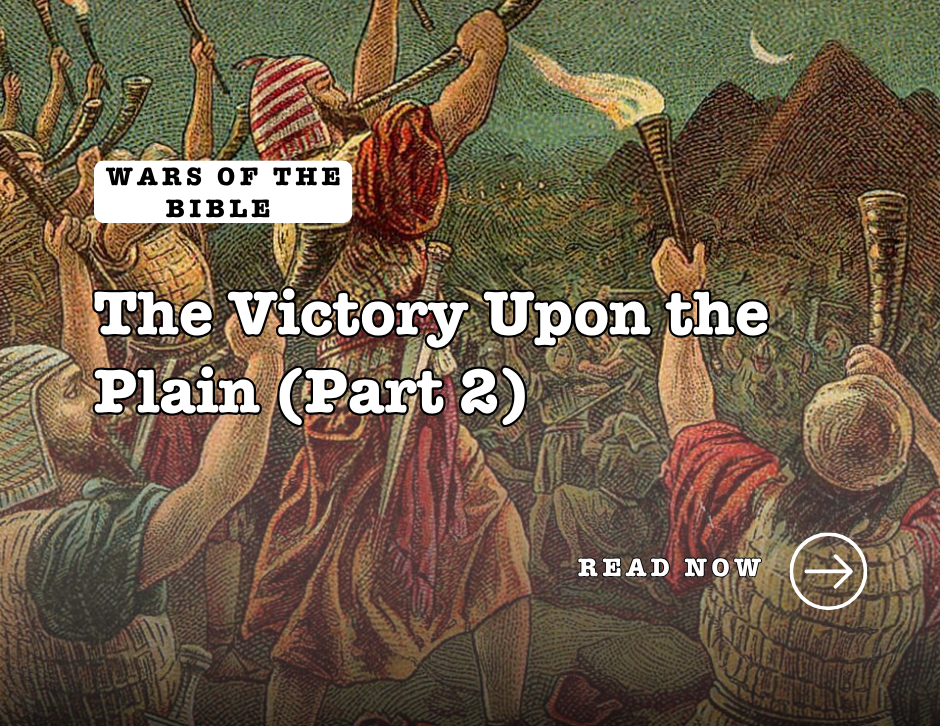
34 So Abimelech and all the men who were with him rose up by night and set an ambush against Shechem in four companies. 35 And Gaal the son of Ebed went out and stood in the entrance of the gate of the city, and Abimelech and the people who were with him rose from the ambush. 36 And when Gaal saw the people, he said to Zebul, “Look, people are coming down from the mountaintops!” And Zebul said to him, “You mistake[d] the shadow of the mountains for men.” 37 Gaal spoke again and said, “Look, people are coming down from the center of the land, and one company is coming from the direction of the Diviners' Oak.” 38 Then Zebul said to him, “Where is your mouth now, you who said, ‘Who is Abimelech, that we should serve him?’ Are not these the people whom you despised? Go out now and fight with them.” 39 And Gaal went out at the head of the leaders of Shechem and fought with Abimelech. 40 And Abimelech chased him, and he fled before him. And many fell wounded, up to the entrance of the gate. 41 And Abimelech lived at Arumah, and Zebul drove out Gaal and his relatives, so that they could not dwell at Shechem.
42 On the following day, the people went out into the field, and Abimelech was told. 43 He took his people and divided them into three companies and set an ambush in the fields. And he looked and saw the people coming out of the city. So he rose against them and killed them. 44 Abimelech and the company that was with him rushed forward and stood at the entrance of the gate of the city, while the two companies rushed upon all who were in the field and killed them. 45 And Abimelech fought against the city all that day. He captured the city and killed the people who were in it, and he razed the city and sowed it with salt.
46 When all the leaders of the Tower of Shechem heard of it, they entered the stronghold of the house of El-berith. 47 Abimelech was told that all the leaders of the Tower of Shechem were gathered together. 48 And Abimelech went up to Mount Zalmon, he and all the people who were with him. And Abimelech took an axe in his hand and cut down a bundle of brushwood and took it up and laid it on his shoulder. And he said to the men who were with him, “What you have seen me do, hurry and do as I have done.” 49 So every one of the people cut down his bundle and following Abimelech put it against the stronghold, and they set the stronghold on fire over them, so that all the people of the Tower of Shechem also died, about 1,000 men and women.
Judges 9:34-49
Was Abimelech a real person and Shechem an ancient city?
While mentions of Abimelech on artifacts or other texts have not been found, archaeological evidence supports these events. Shechem has been identified as Tal Balata, the city's Arabic name. It lies thirty miles north of Jerusalem. Situated in a fertile valley with an abundance of water, it had the resources and strategic position to become a crucial trade city, contributing to its rise in prominence. Shechem is mentioned 60 times in the bible, and many events take place here.

As for the events involving Abimelech, Baruch Halpern, the Covenant Foundation Professor of Jewish Studies at the University of Georgia, wrote in the Anchor Bible Dictionary, “[T]he archaeological record at Shechem dovetails nicely with the story. The site was apparently abandoned after a destruction in the mid-12th century B.C.E.” That aligns with the biblical time period of these events.
Furthermore, we know that Abimelech did not burn the entire city to the ground, but Judges 9:46-49 mentions him burning the temple. Excavations at the site have uncovered signs of burning within the temple's inner chamber, further corroborating that this event, or one that the story is based on, took place.
My spiritual takeaways
This story should look and feel familiar, even though it's ancient. It’s a story of an illegitimate son with ambition for power, seizing the throne deviously and maliciously. We’ve seen it throughout history and in our own forms of entertainment (Game of Thrones comes to mind). But what’s interesting is that we don’t receive an anointed judge; instead, God uses the situation to turn the two sinful parties against each other to exact his justice.
Here are the spiritual takeaways from this event:
God uses all things for his plan
It’s easy for us, especially in today's world and political climate, to become fearful and demoralized when evil gains power. But as believers, we must remember that God uses everything. That applies not just to the wider world around us, but to the personal things that affect us and our families. We must not lose faith; God will find a way to use it, even if we don’t understand how or why.
The desire for power corrupts our relationship with God
Abimelech is a cautionary tale. He desired power so much that he did many terrible things to gain it. First, he rejected his father’s anointed line (because he knew he was illegitimate) and used his mother’s relations to gain the support he needed to seize power. He then took money from a false god to hire his mercenaries before putting all of his brothers to the sword in a mass fratricide. All of this resulted from his lust for power, which wholly corrupted him.
But Abimelech's story does not end here. In the next blog, we’ll look at the Siege of Thebez and the echo of “the single stone” in this story.
Next Blog
Sources
Armstrong Institute of Biblical Archaeology. (2023). Uncovering the Bible’s buried cities: Shechem. https://armstronginstitute.org/847-uncovering-the-bibles-buried-cities-shechem
Bible Archaeology. (n.d.). Abimelech at Shechem. https://biblearchaeology.org/research-articles/abimelech-at-shechem/
Bible Gateway. (n.d.). Judges 9 (English Standard Version). https://www.biblegateway.com/passage/?search=Judges%209&version=ESV
Images
Grace and Truth Ministries. (2017, May 5). Judges 9. Abimelech, part 1: Convincing others that you're something you're not. https://cgtruth.org/Message/1558/Judges-9-Abimelech-part-1-Convincing-others-that-youre-something-youre-not
Medhurst, P. (1904). Abimélech tue ses soixante-dix frères (Judges 9:5) [Illustration based on sketches by James Tissot]. Wikimedia Commons. https://commons.wikimedia.org/wiki/File:Abim%C3%A9lech_tue_ses_soixante-dix_fr%C3%A8res_(Judges_9_5)_%E2%80%A2_invenit_James_Tissot_%E2%80%A2_pinxit_James_Tissot_%E2%80%A2_excudit_Maurice_de_Brunoff_apud_Philip_de_Vere_%E2%80%A2_praesentat_Phillip_Medhurst.jpg
Abimelech burns the tower [Illustration]. (2020). I Followed Jesus. https://ifiwalkedwithjesus.com/wp-content/uploads/2020/09/Abimelech-burns-the-tower.jpg


Comments